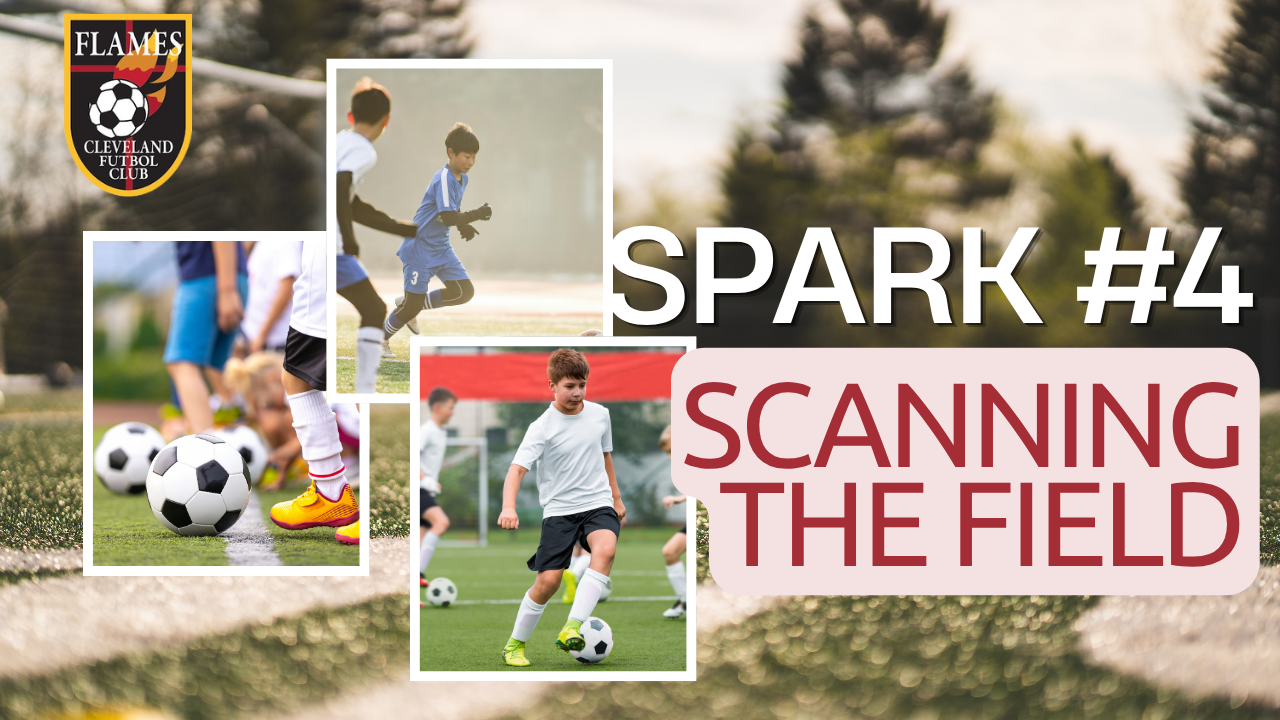
One of the biggest differences between players who simply play fast and players who play smart is their ability to scan.
Scanning means looking around before the ball arrives, checking your surroundings, and gathering information so you can make better decisions. The best players are always doing it. They are checking their shoulder, noticing space, spotting defenders, and seeing teammates before they take their first touch.
That is why this week’s SPARK At-Home Training focus is Scanning & Awareness.
What Is Scanning?
Scanning is the habit of looking before you receive, while you dribble, and before you make your next action. It helps players answer important questions in real time:
- Where is the space?
- Where is the pressure?
- Where are my teammates?
- Which way should I turn?
- What should I do next?
Instead of reacting late, scanning helps players stay one step ahead.
Why It Matters
A player who scans regularly is more prepared when the ball arrives. That leads to:
- Better first touches
- Faster decisions
- More confidence on the ball
- Improved passing choices
- Better ability to turn into space
- Greater awareness of pressure and options
In simple terms, scanning helps players play smarter, not just harder.
Young players often focus only on the ball. That is normal. But as they grow in the game, they need to learn to lift their eyes, check their shoulders, and read the field. That habit can change everything.
This Week’s SPARK Focus: Scanning & Awareness
This week’s at-home SPARK training is designed to help players build the habit of scanning in simple, practical ways. The goal is not perfection. The goal is progress and repetition.
Here is what players will work on this week:
Day 1: Look Before You Touch
Players toss or roll the ball, look left and right before receiving, and then control it. This teaches the important habit of gathering information before the first touch.
Day 2: Scan and Dribble
Players dribble in a small space and look up every few touches, calling out a cone color, object, or number. This helps train players to lift their eyes while still keeping control of the ball.
Day 3: Open Body Receiving
Players pass against a wall or with a partner, check their shoulder before the ball arrives, and receive with an open body shape. This encourages better positioning and helps players prepare for the next action.
Day 4: Shoulder Check Turns
Players move toward one gate, glance over their shoulder, then turn and attack the other gate. This builds the connection between scanning, turning, and decision-making.
Day 5: Weekend SPARK Challenge
Players complete a small cone course, but before each turn or gate, they scan the space and decide early where they want to go next. This combines awareness, planning, and ball control into one activity.
How Families Can Help
Parents and family members can play a big role in helping players build these habits. Encourage your player to slow down and focus on quality. Ask questions like:
- “Did you look before your touch?”
- “What did you see?”
- “Which direction had more space?”
- “Did you check your shoulder?”
You do not need a full field or fancy equipment. A ball, a few cones or markers, a small space, and 10 minutes can be enough to make a big difference.
Tips for Players This Week
As you work through this week’s SPARK sheet, focus on these simple reminders:
- Look before the ball gets to you
- Check your shoulder
- Keep your head up often
- Receive with your body open when possible
- Think ahead before your next touch
At first, scanning may feel unnatural. That is okay. Like any skill in soccer, it improves with practice. The more often players do it, the more comfortable and automatic it becomes.
For Younger and Newer Players
If your player is still developing confidence on the ball, keep it simple. Focus on looking up often, noticing space, and staying in control. The goal is to introduce the habit without overwhelming them.
For More Experienced Players
Challenge advanced players to increase speed, use both feet, and scan before every receive, turn, and pass. Push them to make quicker decisions and play with greater purpose.
Final Takeaway
Scanning is one of the most important habits a soccer player can build. It gives players more information, and more information leads to better decisions.
This week’s SPARK training is about helping players become more aware, more prepared, and more confident every time they step on the field.
Keep working. Keep learning. Keep building good habits at home.
Because the goal is not perfection.
The goal is progress.